













A Former Frat Boy Reveals Sordid Secrets and Troubling Truths About Greek Life
BY STEVEN T. JONES
The windows of Delta Tau fraternity are boarded up.
It's a haunting sight to behold, even though I've seen it many times before. Twice a year, during the ritual of initiating new pledges, we would board up the windows to hide our rite of passage from the world.
Swatting the asses of pledges with thick wooden paddles isn't just the stuff of movies or sadistic rogue fraternities; it has long been the secret reality of many fraternities at Cal Poly, including Delta Tau, where I was an active member in the late ’80s.
My cheeks turned red and raw after taking dozens of blows, just as my hand delivered dozens, perhaps hundreds, during those years. My practiced racquetball swing even made me one of the more effective practitioners of this barbaric art.
The plywood over the windows barely muffled the smack of paddles upon pants soaked in a disgusting dip we called "G." But they did keep prying eyes from watching 24 hours of torture administered by fraternity members who partied it up in the next room throughout a ritual known as "The Weekend."
As macabre as all this seems to me now, I still appreciate the basic principle involved. It's the same with all fraternity pledge programs, which are difficult and humiliating by design, whether or not they involve paddles.
The principle is this: Humans value most the organizations with the highest price of admission. We convince ourselves that membership is worth the price, for not doing so means there is no reason we willingly submitted to such brutal punishment.
Psychologists call this "cognitive dissonance theory," which holds that we all try to align our actions and beliefs. So if the action is bending over to let someone hit us with a paddle, we adjust our belief systems by embracing the fraternity. This powerful rationalization elevates the importance of the fraternity in our minds.
The boards on the windows insulated our secret, turning it into a private shame and inside joke that bonded one fraternity member to another. It was our common experience, guarded by shared silence, that created the brotherhood, and served as the launching pad for even greater debauchery later.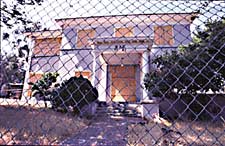
# # #
Today, the boards at Delta Tau mean something else. These boards don't symbolize the perpetuation of our fraternal order; they signal its demise. My old fraternity is dead.
The once raucous party house has a date with a wrecking ball. The one-acre property, once filled with hundreds of beer-swilling young people during our renowned TGIF parties, will be sold. The party is over.
Maybe that's why I now feel free to reveal some of our secrets. There is no longer an organization to which I can bear allegiance, no longer an ongoing secret to keep, no more rituals.
Some of my "brothers" will undoubtedly criticize my loose lips, this breaking of our sacred bond of silence. Yet my intent is to use my experience with Delta Tau to shine light on the fraternity system, which is currently in the middle of Rush Week at Cal Poly.
While Delta Tau was perhaps more hedonistic than most fraternities at Cal Poly, that margin was slim. And the mindset that caused our debauchery and excesses is as inherent to social fraternities as Greek letters.
Overtly, DT was killed by Cal Poly officials when they handed down a 25-year suspension for an incident two years ago that seemed minor by fraternity standards. A drunk pledge was put to bed upstairs after a Thanksgiving party, then slept on his arm wrong, cutting off the circulation.
In the morning, he couldn't move his arm and was taken to the hospital. There, he reacted badly to the drugs doctors gave him, turning the matter into a potentially serious three-day stay, but one from which he fully recovered. Yet his parents demanded the university take action against the fraternity that allowed their precious angel to get wasted.
Already, Cal Poly had been trying to crack down on underage and excessive drinking, fights, and other bad behaviors by fraternities. So they decided to sacrifice Delta Tau as a warning to other fraternities, destroying a local fraternity that had been part of campus life since 1955.
So Cal Poly killed Delta Tau, at least on the surface. But that explanation seems too simplistic. No, Delta Tau was already dying of natural causes when the university administered its mercy killing.
Even before the suspension, DT's days were numbered. Membership had dwindled to little more than a dozen members–down from around 80 in my day–as its popularity among Cal Poly students waned.
Partly, this was due to our status as a local fraternity, rather than a chapter of a national fraternity, which has the perceived benefit of offering graduates more contacts and opportunities in the job market.
In other words, fraternities are still a way for the white boys of Cal Poly to tap into professional networks of white men who might give them jobs. Race and class still have their privileges, even in this supposedly "color-blind" world that many feel could do without affirmative action programs to counter such wellborn privileges.
Delta Tau was also hurt by restrictions on drinking and other forms of indulgence that have been mandated by the university and national fraternities, mostly for reasons of insurance liability and moralistic concerns about partying. A party house like Delta Tau can't fare well in such a climate.
Mostly, though, DT's slide was part of the natural order of things in the Greek system. Once the popularity of a given fraternity or sorority begins to wane, for whatever reason, it spirals down into death, because nobody wants to become part of a group seen as losers, geeks, or wallflowers.
For these reasons and probably many more, it was simply time to go, even if many DT alumni have long tried to avoid this simple truth.
# # #
Delta Tau is now little more than loose collection of former frat boys spanning 45 years, organized into a nonprofit corporation whose sole mission now is to sell the property and decide what to do with the money, which could total nearly $1 million.
It would be too complicated and contentious to simply divide the money up, so our options now center on establishing a scholarship, giving the money to charity, and/or throwing some kind of annual shindig.
If Delta Tau's legacy can be paying for a young person's education or helping a worthy cause, I would feel proud. And not that bittersweet kind of pride we feel for fallen heroes, because I don't shed a tear for my fraternity.
Indeed, I've come to believe the world is better off without Delta Tau, just as it would be better off if more of the elitist, misogynistic, self-indulgent, conformist, and destructive elements of 20th century America suffered the same fate.
Perhaps fraternities themselves are relics of a bygone era, antiquated institutions surviving only by inertia, no matter how hard they try to repackage themselves today as pint-sized service organizations.
Fraternities emphasize their philanthropic ventures and benefits for worthy causes, as if that were their main purpose. We did philanthropies, too, grumbling all the way, knowing it was required payment for being able to carry on our decadent ways.
Maybe 71 Palomar St. will be better off as an apartment complex, or condominiums, or a big vacant lot; anything but a headquarters and refuge for a new generation of Delta Taus.
Don't misunderstand me: I still hold many fond memories of my fraternity days and still maintain close friendships with many of my old fraternity brethren.
My conclusion comes not from bitterness or turncoat treachery, but with the ever-growing realization that what we did in those days often went beyond harmless fun. The "frat boy" I once was seems to me a wholly different being, and that distance allows for calm reflection.
Rather than teaching me the values of brotherhood and good citizenship, Delta Tau taught me and others to objectify and degrade women, to judge people on the basis of class and affiliation, to prop myself up by putting others down, to indulge my vices, and to accept a basic level of incivility as the acceptable norm of social behavior.
These lessons were not unique to my fraternity, but are inherent to the system as a whole, which serves mostly to institutionalize the very worst aspects of modern American male socialization.
Testosterone-fueled aggressive behavior–whether it takes the form of gay bashing, schoolyard shootings, buccaneering capitalism, "feminazi" cursing, or our bomb-dropping U.S. foreign policy–is nurtured by fraternity life.
# # #
Fraternities breed a conformity of belief and action that can be difficult to break. Some people do, but most don't. Machismo is the socially reinforced norm. Talking tough, partying hard, and nailing chicks are the sure-fire routes to acceptance.
Any major departures from acceptable forms of behavior and belief are greeted with overwhelming ridicule and scorn, even if subtly delivered in the form of jokes or "good-natured ribbing."
In such a climate, there was no way that one prominent and respected Delta Tau from the late-’80s could come out of the closet and admit he was gay, an announcement he saved for shortly after graduation. Even then, it was greeted with homophobic derision by many of his closest one-time "brothers."
Fraternities wean developing young minds on "groupthink," that insidious barrier to rational, enlightened thought. Groupthink set the parameters of our thought and made it so there was never serious talk of drastic changes to The Weekend, even if there were those who secretly came to view the ritual as barbaric.
The problem is not with the individuals, because there were many kind-hearted and responsible Delta Taus in my day. The problem was the group dynamic, a ball no individual could stop once it got rolling, no matter how much damage it did.
Lest you think my views no longer relevant, let me offer a couple of examples from today's Greek life at Cal Poly, including the final chapter in 71 Palomar's fraternal existence.
Last year, with Delta Tau suspended and just a half-dozen active members living in a house that sleeps 17, we made the decision to rent the house to another fraternity: Sigma Alpha Epsilon.
Although the arrangement was to merge our last active members into that fraternity and maintain the property and history of DT, SAE members proceeded to thrash the joint, create conflicts with neighbors and police, and destroy DT property like the plaques created by each pledge class.
At an alumni meeting, we confronted the remnants of our fraternity, the final DT actives who lived in the house with the SAEs, "Why didn't you do anything to stop them?" They responded with powerless shrugs, and I understood what they meant.
When DT alumni decided to evict SAE, the frat boys completed their work, breaking most of the windows in the house, rendering it unlivable. Who knows, perhaps we would have done the same thing in our day under those circumstances.
I also got a peek inside modern fraternity life a few years ago while working on a cover story for New Times about all the new restrictions on partying, only to discover that behind the responsible rhetoric little had changed. Rules are still made to be broken.
Fraternity parties are still about getting wasted and encouraging women to do the same. They're about pushing the limits of acceptable behavior and knowing your brothers will back you up.
Because when you have a group of like-minded young males supporting you, the possibilities for debauchery become endless, offering insular support for acts of violence, overindulgence, and even rape.
Under some modern definitions of acquaintance rape, in which severely intoxicated women aren't legally capable of consenting to sex, I can bear witness to knowledge of many incidents at Delta Tau that today might be called rape. Most of us can.
Of course, those were the extreme cases. Usually, it was more like a game, trying to parlay that twinkle of attraction into sex, lubricating the path with copious amounts of booze. It was a game both sexes played.
But what stands out in my mind are the uglier times, late at night when there is no longer that twinkle, just a young woman who had too much to drink, transformed into prey in the eyes of equally intoxicated young predators.
Oftentimes, the women didn't even get so drunk of their own accord, but were sabotaged by punch spiked with super-potent Everclear or cajoled into playing drinking games that had savage effects.
Wasted women being led staggering to a bedroom at Delta Tau was commonplace, often as the brotherhood acknowledged and encouraged the act. I was as complicit as anyone, something for which today I feel shame, especially since becoming the father of two daughters gave me a vested interest in how women are treated.
Sure, we would shake our heads in disgust when some of the more heinous accounts were told during the story portion of our Sunday night meetings, but it was usually with an uncomfortable smile on our faces. And it was never accompanied by a reproach of the offending brother.
# # #
As I've said, there were shining stars amid our unwashed partier masses at DT, people who would step forward to run things and who would sometimes encourage moderation of our more destructive behaviors.
The group party dynamic was too strong. The substance abuse too pervasive and accepted for us to acknowledge anyone trying to set limits. We all joined Delta Tau to have fun, to push the boundaries, and those who would lead us had to abide that reality.
Sometimes, abiding that reality meant embracing it. One former fraternity president was a good student, kind and soft-spoken, and seemingly a born leader active in university affairs.
Yet he was also one of those guys who would just get silly drunk, the kind of drunk when you look into their eyes and see they really aren't there. I've yet to meet another individual whose sober self contrasted so dramatically with his drunken one.
Eventually, he would pass out somewhere and be mercilessly tortured with something like the Condiment Treatment: mustard in the ears, catsup on the hands, and maybe some whipped cream down the pants for good measure.
Then we would take his picture. There are lots of pictures of passed out people in various sick poses. I remember one where a passed out brother's mouth was open toward what looked like an unseen man's penis. Yes, we all had quite a laugh over that one.
Even then, I remember it seeming strange to me that we would all encourage each other to drink to excess and then savage anyone who succumbed to the effects. But that was just the way it was, as if there was nothing we could do to change it, to become less cruel.
Being harsh and biting to one another was just how we related; it was our currency of communication. Weaknesses and flaws received the laser-focused attention of the group; scabs were ripped off emotional wounds, bringing them oozing to the surface.
Such a relationship dynamic toughened us, but it also brought out the cruel and predatory parts of our natures. It was a tough existence at times, and you had to be tough to survive it, so you became tough, emotionally tough. You became the über-male, burying deep your restraint, sensitivity, and other feminine qualities.
That mindset isn't exclusive to fraternities by any stretch of the imagination. It flourishes in sports teams, police units, street gangs, the military, Promise Keepers, and other insular groups that place great value on maleness, even many circles of friends.
Just go to a bar frequented by college students on any given weekend, and you'll find young men transformed into aggressive, rude, and downright dangerous creatures by excessive alcohol consumption.
But downtown there are bouncers and cops to place limits on behavior. At frat parties there is only social pressure, and that pressure often pushes the wrong way as partiers seek to cut loose and get crazy and encourage others to do the same.
The same thing can happen at all kinds of college parties, especially those dominated by young male partiers. And there is certainly an argument to be made for concentrating such people into fraternity houses, which are licensed, generally have a mostly sober president or other leader in charge, and have a relationship with their neighbors and police.
Indeed, most San Luis Obispo Police Department officers will tell you they would rather respond to a loud party complaint at a fraternity than some random house where they don't know what to expect.
Yet fraternities are an institution that serves to distill the worst aspects of young males, and to concentrate that distillation in one place, where weekend after weekend the ante gets increased and possibilities for problems get expanded, all of it cloaked in silence.
The boards on fraternity windows aren't always physical boards. Sometimes they are just the insulation fraternities create for themselves, the blinders that prevent young men from connecting with the world in a harmonious way and prevent outsiders from truly seeing what happens inside fraternities.
Perhaps it's always been that way, since the days of "Animal House" and before, days from which even the oldest DT alumnus can tell repulsive stories. Or maybe it's gotten worse in recent years, since the idea of behaving like a "gentleman" has come to seem like a quaint, old-fashioned concept.
Whenever it started, now is as good a time as any to end it, to rip the boards off the windows and expose fraternities to the light of a new day.
If our species is to evolve, if we can ever hope to create a better, less brutal world, we need to stopping cultivating the worst aspects of our nature. Maybe fraternities are a good place to start that process. Æ
Steven T. Jones pledged Delta Tau in the fall of 1986 at the age of 18. He has been a staff writer for New Times since 1995.