













An Ancient Food and Modern Kitschy Plant Becomes the Healthy Choice for the Future
BY WILLIAM ANDERSON
Admit it. You laughed. When you saw the Chia Pet on this week’s cover, you may have even had the Ch-ch-ch-chia Pet advertising slogan run through your head.
That’s fine. After all, the Chia Pet has become an American institution, albeit a kitschy one–clay animals with sprouted chia seeds covering their bodies.
Because the question of what might be the optimum diet can, at times, be emotionally charged for many people, having a significant emotional commitment in believing they know what's best, I would like to suspend the issues of diet and introduce you to a "super" food that all would agree on. It's known as the chia seed. Once valued so much that it was used as currency, this unique little seed has exceptional nutritive and structural benefits.
Little is known, however, of the seeds’ tremendous nutritional value and medicinal properties. For centuries this tiny little seed was used as a staple food by the Indians of the Southwest and Mexico. Known as the "running food," its use as a high-energy endurance food has been recorded as far back as the ancient Aztecs.
It was said the Aztec warriors subsisted on the chia seed during their conquests. The Indians of the Southwest would eat as little as a teaspoonful when going on a 24-hour forced march. Indians running from the Colorado River to the California coast to trade turquoise for seashells would only bring the chia seed for their nourishment.
If you try mixing a spoonful of chia in a glass of water and leaving it for approximately 30 minutes or so, when you return the glass will appear to contain not seeds or water but an almost-solid gelatin. This gel-forming reaction is due to the soluble fiber in the chia.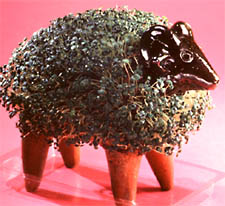
Researchers believe this same gel-forming phenomenon takes place in the stomach when food containing these gummy fibers, known as mucilages, are eaten. The gel that's formed in the stomach creates a physical barrier between carbohydrates and the digestive enzymes that break them down, thus slowing the conversion of carbohydrates into sugar.
In addition to the obvious benefits for diabetics, this slowing in the conversion of carbohydrates into sugar offers the ability for creating endurance. Carbohydrates are the fuel for energy in our bodies. Prolonging their conversion into sugar stabilizes metabolic changes, diminishing the surges of highs and lows and creating a longer duration in their fueling effects.
One of the exceptional qualities of the chia seed is its hydrophilic properties, having the ability to absorb more than 12 times its weigh in water. Its ability to hold onto water offers the ability to prolong hydration.
Fluids and electrolytes provide the environment that supports the life of all the body's cells. Their concentration and composition are regulated to remain as constant as possible. With chia seeds, you retain moisture and regulate more efficiently the body's absorption of nutrients and body fluids. Because there is a greater efficiency in the utilization of body fluids, the electrolyte balance is maintained.
Example: Fluid and electrolyte imbalances occur when large amounts of fluids are lost from vomiting, diarrhea, high fever, or, more commonly, sweating. The loss of extracellular fluid occurs in these conditions. Intercellular fluid then shifts out of the cells to compensate, causing abnormal distribution of electrolytes across cell membranes and resulting in cellular malfunction.
So, retaining and efficiently utilizing body fluids maintains the integrity of extracellular fluids, protecting intercellular fluid balance. The results of that ensure normal electrolyte dispersion across cell membranes (electrolyte balance), maintaining fluid balances and resulting in normal cellular function.
Chia seeds are the definitive hydrophilic colloid for the 21st century diet. Hydrophilic colloids (watery, gelatinous, gluelike substances) form the underlying elements of all living cells. They possess the property of readily taking up and giving off the substances essential to cell life. The precipitation of the hydrophilic colloids causes cell death.
The foods we eat, in the raw state, consist largely of hydophilic colloids. Cooking, on the other hand, harms its colloidal integrity. This change in the colloidal state alters the hydration capacity of our foods so as to interfere with their ability to absorb digestive juices. If we were to eat a raw diet we wouldn't need to introduce the addition of any hydrophilic colloid to our diet.
Uncooked foods contain sufficient hydrophilic colloids to keep gastric mucosa in the proper condition. But even raw foods must first be partially broken down by the digestive juices, beginning in the mouth and continuing through the upper tract, to allow the gelatinous reaction to take place.
Because of this upper-tract digestive process, those who suffer from slow digestion, gas formation, relaxed cardia, and heartburn in which the burning is due to organic acids instead of an excess of the normal hydrochloric acid (which frequently accompanies chronic inflammation diseases affecting such organs as the heart, lungs, gall bladder and appendix) are usually restricted from eating raw foods.
A hydrophilic colloid incorporated with these foods may be used either in connection with a patient's regular food or with whatever diet the physician feels is best suited for his patient. The patient with gastric atony or nervous indigestion who complains of heartburn and/or vomiting four to five hours after eating is often helped. There is a lessening of emptying time of the stomach and an improvement in gastric tone. A strict dietary regimen is not as necessary when the hydrophilic colloid is used.
Chia seed may be used in conjunction with almost any diet your doctor or nutritionist feels is necessary for your condition. The chia's hydrophilic colloidal properties aid the digestion of any foods contributing to a patient's suffering as a result of a sour stomach. Even if you have a sensitivity to certain foods, they may be tolerated with slight discomfort or none at all if a hydrophilic colloid is made a part of your diet.
The positive effects on the digestion in the upper portion of the gastrointestinal tract often leads to improvement in patients who suffer from spastic colitis. Those who need to puree their foods may find benefits from hydrophilic colloids, which may lead to eliminating the necessity for pureeing. Even raw vegetables, green salads, and fruits which are largely restricted may often be given to these patients with little or no discomfort after a short time.
There are several hydrophilic foods available that offer these natural benefits. Cactus juice, beet juice, agar, the edible seaweeds, and many proprietary preparations that include the silica gels, mucilaginous substances of vegetable origin, are among colloids that prove effective.
Each one of the above-mentioned substances have one or more drawbacks. They are either too expensive, may produce toxic side effects, are bad-tasting, are not readily available, have insufficient hydration capability, or are indigestible.
Chia seed, a muscle and tissue builder and an energizer of endurance with extensive hydration properties, possesses none of the above disadvantages, and because of its physiochemical properties it supports effective treatment in immediate problems of digestion.
Exactly why this should be true may be puzzling at first. However, if we consider the effect of unusual irritation upon the nerves of the gastrointestinal canal, it is reasonable to think that a less violent and more balanced digestion might quiet the activity of the otherwise hyperactive gut. Inasmuch, the same foods which formerly produced irritation may frequently be continued without harm when hydrophilic colloids are used. The relief to nerve irritation seems to offer a logical explanation.
The change in the lower gastrointestinal tract is due to the effect of the hydrophilic colloid and to a more complete digestion taking place along the entire tract due to physiochemical alterations. Both factors are important, as there is undoubtedly a better assimilation of food that supports enhanced nutritional absorption while significantly extending necessary hydration as well as encouraging proper elimination.
As a source of protein, the chia is digested and absorbed very easily. This results in rapid transport to the tissue and utilization by the cells. This efficient assimilation makes the chia very effective when rapid development of tissue takes place, primarily during growth periods of children and adolescents. It would also be effective for the growth and regeneration of tissue during pregnancy and lactation, and this would include regeneration of muscle tissue for conditioning athletes, weight lifters, etc.
Other unique qualities of the chia seed are its high oil content, the richest vegetable source for the essential omega-3 fatty acid. It has approximately three to 10 times the oil concentrations of most grains and one and a half to two times the protein concentrations of other grains. These oils, unsaturated fatty acids, are the essential oils your body needs to help emulsify and absorb the fat-soluble vitamins A, D, E, and K.
Chia seeds are rich in the unsaturated fatty acid linoleic, which the body cannot manufacture. When there are rich amounts of linoleic acid supplied to the body through diet, linolenic and arachidonic acids can be synthesized from linoleic acid.
Unsaturated fatty acids are important for respiration of vital organs and make it easier for oxygen to be transported by the blood stream to all cells, tissues, and organs. They also help maintain resilience and lubrication of all cells and combine with protein and cholesterol to form living membranes that hold the body cells together.
Unsaturated fatty acids are essential for normal glandular activity, especially of the adrenal and the thyroid glands. They nourish the skin cells and are essential for healthy mucus membranes and nerves. The unsaturated fatty acids function in the body by cooperating with vitamin D in making calcium available to the tissues, assisting in the assimilation of phosphorus, and stimulating the conversion of carotene into vitamin A.
Fatty acids are related to normal functioning of the reproductive system, and chia seeds contain beneficial long-chain triglycerides in the right proportion to reduce cholesterol on arterial walls.
The chia seed is also a rich source of calcium, as it contains the important mineral boron, which acts as a catalyst for the absorption and utilization of the calcium by the body.
There are additional benefits from the chia seed aside from the nutritive enhancements when used as an ingredient. It was also used by the Indians and missionaries as a poultice for gunshot wounds and other serious injuries. They would pack the wounds with chia seeds to avoid infections and promote healing.
There are a wealth of benefits beyond the information outlined in this article and a treasure-trove of benefits yet to be discovered. Chia seed, having a qualitatively unique structural richness along with a profound nutritive profile, is one of man' s most useful and beneficial foods and is destined to be the "Ancient Food of the Future."
William Anderson is co-founder of Menu 4 Life in Paso Robles.